Home composting for beginners is a practical way to reduce kitchen waste and create nutrient-rich soil for plants. This guide gives clear, step-by-step instructions and troubleshooting tips so you can start composting at home today.
Why Home Composting for Beginners Works
Composting mimics natural decomposition by combining carbon-rich and nitrogen-rich materials. Over time, microbes break these materials into humus, improving soil structure and plant health.
For beginners, home composting is cost-effective and simple. You need basic tools and a small routine to keep the process active.
Benefits of Home Composting for Beginners
- Reduces household waste and trash costs.
- Creates free, organic soil amendment for gardens and potted plants.
- Helps retain moisture and improves soil fertility.
- Reduces methane emissions from landfills.
What You Need to Start Home Composting for Beginners
Starting composting does not require specialized equipment. A simple bin, some yard space or a balcony container, and basic materials are enough.
Essential Tools and Materials
- Compost bin or tumbler, or a DIY pile in a corner of the yard.
- Brown materials (carbon): dry leaves, shredded paper, cardboard.
- Green materials (nitrogen): vegetable scraps, coffee grounds, grass clippings.
- Garden fork or turning tool and a watering can or hose for moisture.
Step-by-Step Home Composting for Beginners
Follow these steps to build and maintain a healthy compost pile. Keep layers balanced and monitor moisture and aeration.
1. Choose a Location and Container
Pick a shady, well-drained spot near your kitchen or garden. For small spaces, use a compact compost bin or a worm bin (vermicomposting).
2. Build Your First Layer
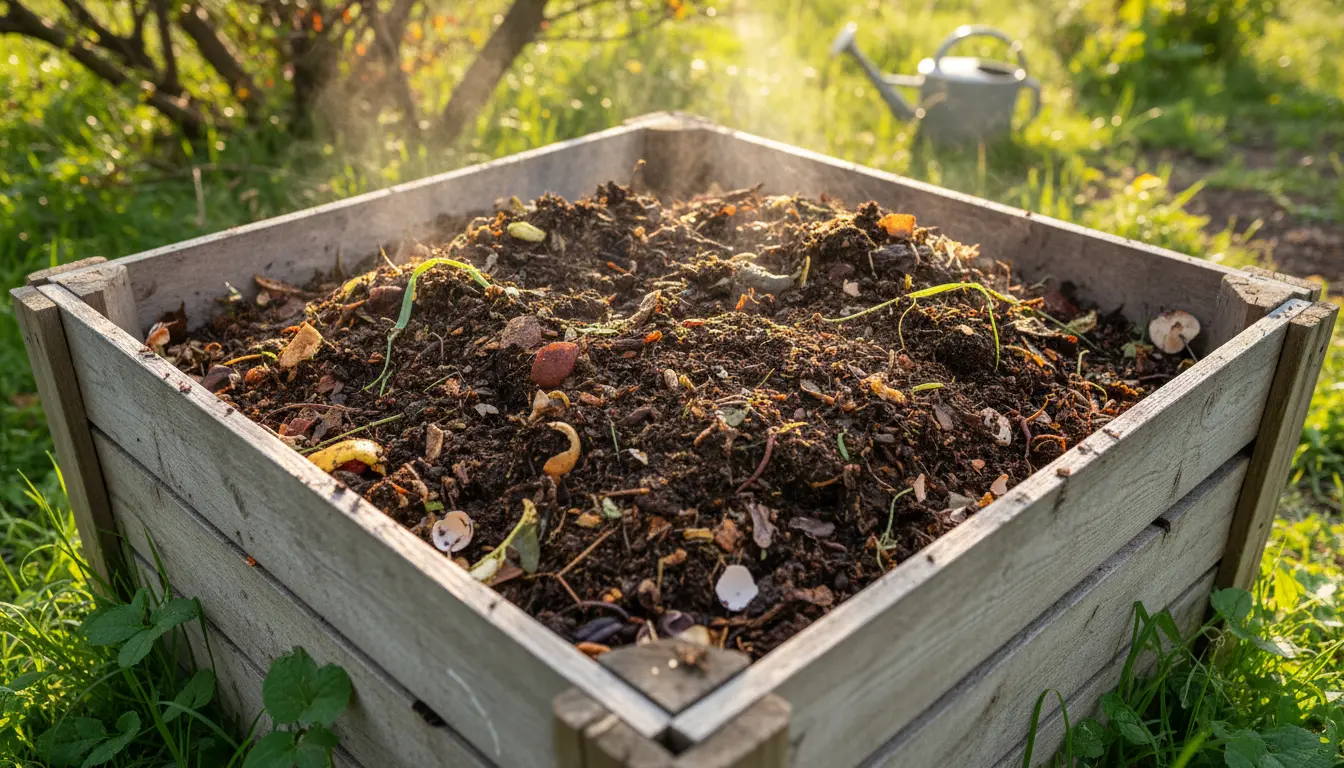
Start with a 2–4 inch layer of coarse brown materials to promote airflow. Add alternate layers of green and brown materials, aiming for roughly a 2:1 ratio of browns to greens by volume.
3. Maintain Moisture and Aeration
Compost should be moist like a wrung-out sponge. If it gets too dry, add water and more greens. Turn the pile every 1–2 weeks to add oxygen and speed decomposition.
4. Know When It’s Ready
Finished compost looks dark, crumbly, and earthy-smelling. Depending on conditions, compost can be ready in 2 months to a year. Use it to top-dress soil, mix into potting mix, or mulch around plants.
Troubleshooting Home Composting for Beginners
Common problems are usually easy to fix with a few adjustments. Use the checklist below to diagnose issues quickly.
Common Problems and Fixes
- Bad odor: Add more brown materials and turn the pile to increase aeration.
- Pile too dry: Add kitchen greens or water until moist but not soggy.
- Fruit flies or pests: Bury food scraps under a layer of browns or use a closed bin.
- Slow decomposition: Increase surface area by chopping materials and ensure the pile is warm enough.
A properly maintained compost pile can reach temperatures between 130–160°F (54–71°C), which helps kill weed seeds and pathogens.
Practical Tips for Success
Small habits make composting easier and more effective. Try simple routines and scale up as you get comfortable.
- Keep a small countertop bin for scraps and empty it daily to the outdoor pile.
- Chop or shred materials to speed decomposition.
- Rotate layers and keep a roughly balanced mix of greens and browns.
- Label your composting area with a list of allowed and not allowed items.
What Not to Compost
Avoid meat, dairy, pet waste, and diseased plants in typical home composting systems. These items attract pests or can harbor pathogens.
Small Real-World Case Study
Jane, a city apartment gardener, started home composting for beginners using a 5-gallon worm bin on her balcony. She saved one kitchen trash bag per week from landfill and produced about 10 liters of worm castings in four months.
The castings boosted her tomato yields and reduced the need for store-bought fertilizers. Jane’s simple routine—emptying a countertop container twice a week and feeding the bin regularly—made composting manageable with limited space.
Examples of Uses for Finished Compost
- Mix 25% finished compost into potting soil for seedlings and transplants.
- Top-dress vegetable beds with a 1–2 inch layer in spring and fall.
- Use as a soil amendment when planting trees and shrubs to improve water retention.
Home composting for beginners is an accessible, low-cost way to manage organic waste and improve garden health. With a simple setup and consistent habits, anyone can turn kitchen scraps into valuable soil amendment.